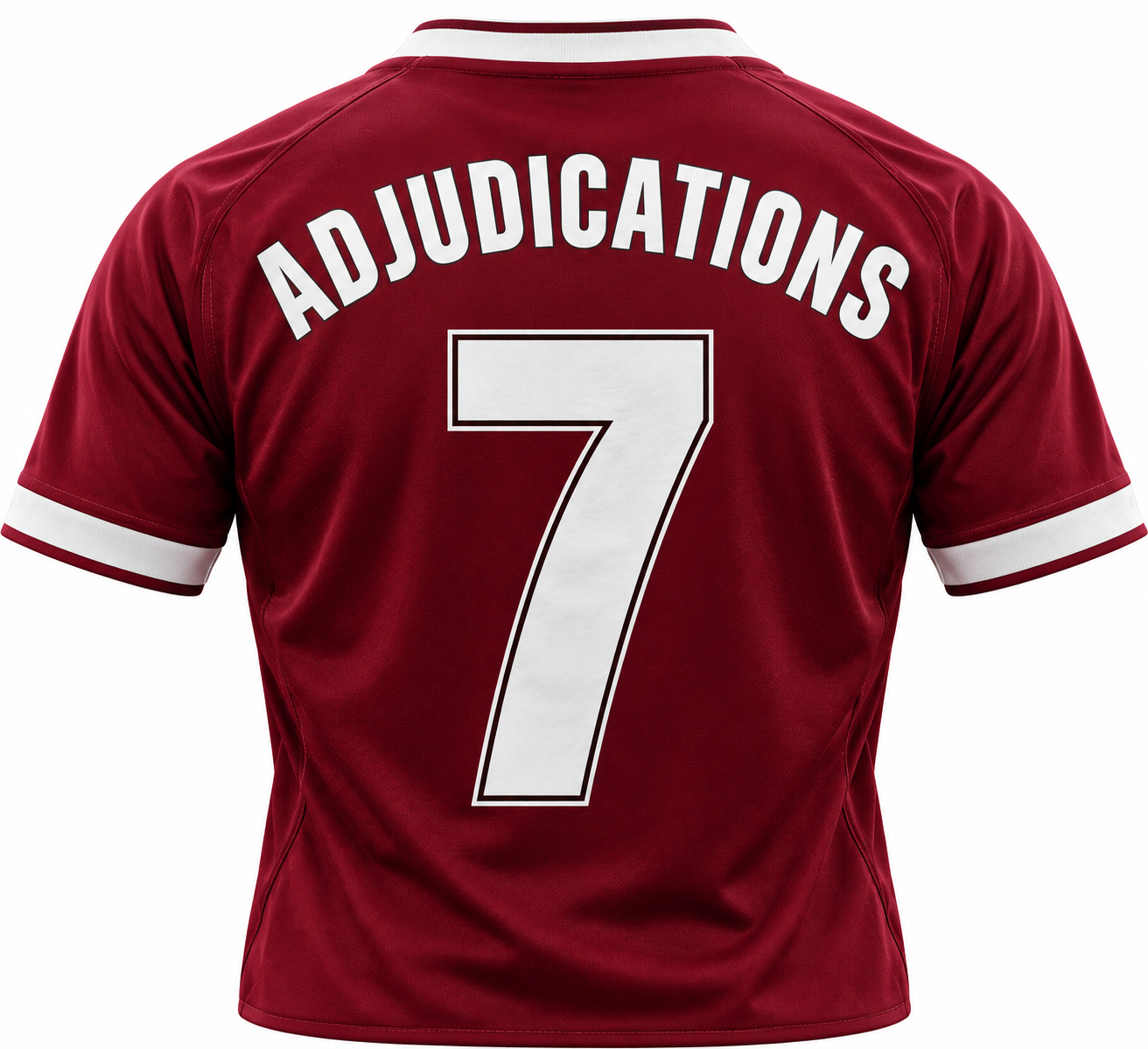
Seven adjudications, three points, but no victory?
October 20, 2026
There's something about the number seven, isn't there? The Seven Wonders of the World, the Seven Seas, seven days of the week, seven colours of the rainbow, 007, The Magnificent Seven, not to mention some of football's most famous number sevens including the illustrious likes of Cristiano Ronaldo, David Beckham, George Best and Kevin Keegan. Of course, seven is also supposed to be a lucky number. Well, not always it seems in the recent case of Avanton Capital CC Limited v LUC Construction Limited, where LUC commenced not one, not two, but seven adjudications simultaneously ….
The background
Avanton employed LUC to design and build three industrial units in Battersea. Following practical completion in April 2025, the parties disagreed over the value of the final account. Avanton, maintained that it had overpaid the contractor, LUC, by approximately £1.88 million, while LUC considered that further sums were due to it.
On 22nd May 2026, LUC commenced seven different adjudications relating to different aspects of the value dispute before seven different adjudicators. On 13th June 2026, Avanton commenced its own adjudication, arguing that LUC had failed to serve a valid payment notice or pay less notice in respect of the notified sum of £1,877,640.25 and was therefore obliged to pay that amount in full. Meanwhile, between 24th June and 10th July 2026, LUC secured three adjudication decisions which found that Avanton had overstated its contra-charges in the final account by a total of £710,264. However, on 9th July 2026, the adjudicator in Avanton's adjudication determined that LUC was required to pay the full notified sum of £1,877,640.25, together with interest and £11,460 plus VAT in adjudicator's fees and expenses. Following that decision, the adjudicators dealing with the remaining disputes resigned, leaving those adjudications unresolved.
When LUC failed to pay, Avanton commenced enforcement proceedings. LUC initially challenged enforcement on natural justice grounds but subsequently abandoned that argument. Instead, LUC asked the court to determine its application for a stay of execution arguing:
Avanton would probably be unable to repay the money if the final account were subsequently determined differently;
Avanton’s financial position had materially deteriorated since the contract was entered into; and
enforcement would cause manifest injustice because LUC might be forced to cease trading before obtaining a final determination.
Mr Justice Constable rejected the application. Applying the established principles in Wimbledon v Vago, the Court emphasised that a party seeking a stay must demonstrate a “probable inability of the claimant to repay the judgment sum”. Although Avanton was a special purpose vehicle (SPV) with limited cash resources, it had historically benefited from substantial group funding. LUC had also known about Avanton's corporate structure when entering into the contract and had not established that the risk of non-repayment had materially increased. The Court was equally unpersuaded by LUC's argument that enforcement would cause manifest injustice. Although a paying party's financial difficulties may justify a stay in exceptional circumstances, convincing evidence is required. LUC had not demonstrated that enforcement would necessarily prevent it from continuing to trade or pursuing a final determination, nor had it established that alternative sources of funding were unavailable.
Summary judgment was therefore granted in Avanton's favour, subject to an allowance for an award owing to LUC pursuant to a separate adjudication decision.
When the cash flow cuts both ways
The case of Avanton raises, among other things, the familiar tension between enforcing adjudicators' decisions and the financial risks of doing so. It's a subject we've returned to in our blogs over the years and the chapter on "Stays of Execution and Insolvency" in mine and Jonathan's new book, Reflections on Construction Adjudication, includes two blogs examining precisely these issues.
The first, "Should I stay or should I pay now?", considered four TCC decisions from 2013: Farrelly v Byrne Brothers, Westshield v Buckingham, FG Skerritt v Caledonian Building Systems and True Fix v Apollo. In each case, the court declined to grant a stay of execution, reinforcing the principles established in Wimbledon v Vago mentioned above. As I observed at the time, it was "four nil to the enforcement boys!"
The second blog, "Partial stay as 'claimant is now an SPV with no P'", examined Equitix E v Bester Generacion, where the court took a rather different approach. Equitix was an SPV established for a biomass energy project which it subsequently decided not to pursue. The concern was not simply that Equitix had limited assets, but that, having abandoned the project, it might be wound up before Bester could recover any overpayment. In those unusual circumstances, the court granted a partial stay, applying the approach to manifest injustice considered in Galliford Try v Estura.
I think both previous blogs provide useful context for Avanton, where the court was once again faced with the difficult balance between maintaining cash flow and protecting a paying party against the risk of never recovering its money. Although Avanton was not insolvent, LUC argued that there was a real risk it would be unable to repay the money if the final account were subsequently determined in LUC's favour. At the same time, LUC maintained that being required to pay immediately could threaten its own ability to continue trading. And therein lies the dilemma. Adjudication is designed to maintain cash flow, and its effectiveness depends upon decisions being enforced promptly, but what happens when "pay now, argue later" creates the possibility that there may be no money left to recover later? Or, when paying now might leave the paying party unable to survive long enough to argue later? The courts have long had to grapple with these competing considerations, but the starting point remains firmly in favour of enforcement.
As Avanton demonstrates, concerns about a party's financial position, however genuinely held, are not enough on their own. There must be convincing evidence of a probable inability to repay, rather than merely a possibility, and arguments that enforcement would cause manifest injustice require equally persuasive support. The fact that payment might cause serious financial difficulties for the paying party does not, without more, justify a stay of execution.
The strategy - at sixes and sevens?
Although principally an enforcement decision, I think Avanton also raises some interesting questions about the strategic use of adjudication, particularly the merits of pursuing multiple disputes simultaneously. There is nothing inherently wrong with referring several disputes to adjudication. Indeed, it can be an effective way of resolving discrete issues, protecting cash flow and encouraging settlement. But seven adjudications, involving seven different adjudicators, is quite an undertaking. Apart from the costs and practical challenges, there is the question of whether the exercise is actually bringing the parties any closer to resolving their differences.
Interestingly, the judgment does not explain why LUC chose this approach. There may well have been perfectly sound reasons, and it would be unfair to suggest otherwise. Nevertheless, just because you can adjudicate several disputes, does that necessarily mean you should? Rather fittingly, Chapter 7 of the new book looks at serial adjudications. Although Avanton concerned simultaneous rather than successive referrals, many of the same questions arise about the effective use of adjudication and the risk of multiple proceedings becoming an end in themselves.
From an adjudicator's perspective, our role is to determine the dispute referred to us, not to assess the wisdom of a party's wider strategy, but for the parties, that strategy matters enormously. What are they ultimately trying to achieve? Payment, clarification of contractual rights, a stronger negotiating position or a final resolution? LUC secured three favourable adjudication decisions, yet still faced a substantial enforceable payment obligation following Avanton's single adjudication. Winning individual battles does not necessarily mean winning the war - for that, perhaps you'd need a Seven Nation Army!
BACK TO BLOG
 Print Article
Comments
Comments are subject to our site participation guidelines and moderation policy, which can be viewed here. By joining the conversation, you are accepting our site rules and terms. Please note our policy is for readers to use their real names when commenting.
There are no comments for this blog yet!