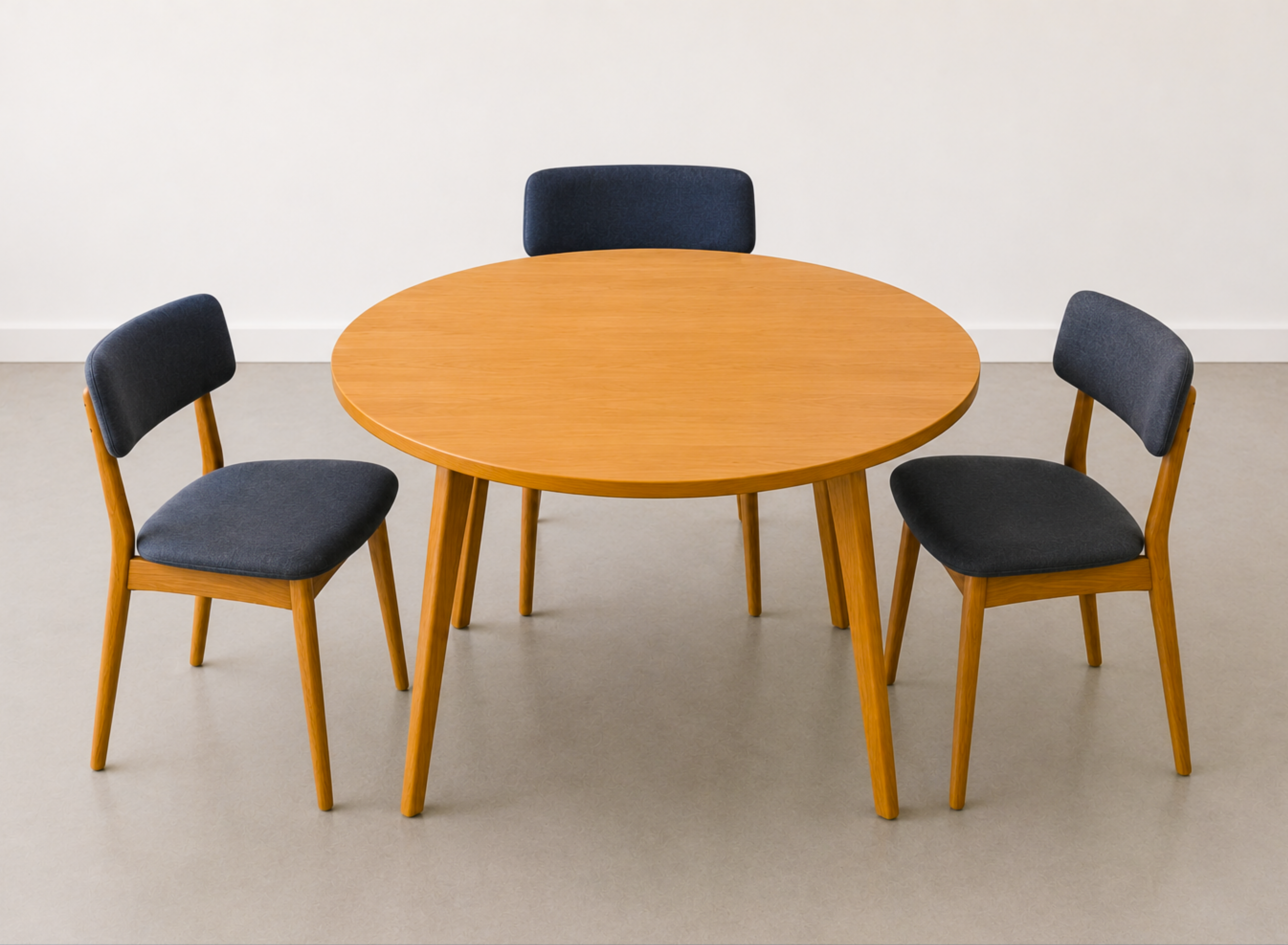
Mediation: The missing seat at the disputes table?
June 09, 2026
Last week saw the return of London International Disputes Week for its seventh year. Against the backdrop of this year's theme, Tradition, Trust and Transformation in International Dispute Resolution, discussions were dominated by AI, ESG, geopolitical instability and the future of Alternative Dispute Resolution. Yet, among those ADR-themed events, one topic appeared to receive relatively little attention: mediation. I’m sure it cropped up in many broader discussions over the week, but from the 150+ member hosted events on offer, I couldn’t help but notice only a few specifically mentioned mediation and it was notably absent from the Main Conference programme too. This is not intended as a criticism by any means, but just an interesting observation: why does mediation often struggle to get the same airtime as some of the more traditional forms of dispute resolution?
Mediation has matured
At first glance, perhaps none of this should come as a surprise given the fact that mediation is a confidential process and, with the exception of domestic judgments which deal with the powers of judges to force parties to mediate, there are no reported outcomes. Furthermore, much of the disputes industry remains centred on determinative processes with the objective of obtaining a binding decision from an independent third party. Historically, mediation has also occupied a different position: as something that sits outside the "real" dispute resolution processes, a procedural hurdle rather than a genuine opportunity to resolve a dispute, or even simply a form of dispute avoidance rather than dispute resolution.
However, to me, some of these attitudes are increasingly outdated. Modern mediation is much more than an informal discussion around a table in the hope that common sense prevails. The best mediations can be highly facilitated negotiations conducted with the assistance of an experienced independent mediator who understands both the legal and commercial dimensions of the dispute, as well as the parties’ needs. If mediation produces a settlement that both parties can live with, then it has arguably resolved the dispute every bit as effectively as a judgment, decision or arbitral award. Some might even argue it has done so more effectively, achieving finality while preserving management resource, money and even on occasion the parties’ working relationship. Either way, the objective is not necessarily “compromise for the sake of compromise”, but to identify whether there is a deal available that is preferable to the risks associated with continuing the fight.
Perhaps the growing confidence in mediation has also been fuelled by recent judicial developments. In James Churchill v Merthyr Tydfil County Borough Council, the Court of Appeal held that courts can, in appropriate circumstances, stay proceedings and require parties to engage in ADR. Significantly, in the concluding section of the judgment, Sir Geoffrey Vos, Master of the Rolls, expressly suggested that “the parties ought to consider whether they can agree to a temporary stay for mediation or some other form of non-court-based adjudication” reflecting an increasingly clear judicial view that mediation should not be regarded as a side dish, but as a mainstream component of the dispute resolution menu. Do have a read of Matt’s blog about his views on the impact of Churchill on the use of ADR too.
The economic reality
The economic environment is undoubtedly influencing why parties are turning to ADR, and mediation in particular. Across many sectors, margins remain under pressure and businesses contend with inflation, increased financing costs, supply chain disruption and ongoing uncertainty in project delivery. Cash preservation remains a priority making the prospect of significant legal fees, expert costs, and management time, coupled with the uncertainty of formal proceedings, less attractive than it once may have been. Mediation offers an opportunity to reach a commercial outcome without incurring the full costs associated with other forums. In challenging economic times, that proposition becomes particularly attractive.
The rise of commercial pragmatism
However, I think it would perhaps be too simplistic to attribute the growth in mediation just to economic pressure. Parties are not abandoning their positions; rather, they are becoming more sophisticated in how they manage disputes. Where mediation was once viewed by some as a sign of weakness, that perception has largely changed. Parties, advisers and insurers increasingly assess disputes not just on legal merits, but on risk-adjusted outcomes. No dispute outcome is guaranteed, so legal merits are weighed against costs, management time, enforcement risks, reputational considerations and the value of certainty. Viewed through that lens, mediation often makes considerable commercial sense.
Why mediation works - the six Cs
Sticking with the positives, they’re fairly well established by now, but I think it’s always good to remind ourselves of why mediation works:
1. Commercial flexibility
Courts, tribunals and adjudicators are generally limited to determining legal rights and liabilities. Their role is to decide who is right and who is wrong. Businesses, however, often need more nuanced solutions and mediation allows parties to explore commercial solutions that may be unavailable through formal proceedings. A mediated settlement can comprise much more than just payment of a sum of money; it can comprise countless other commercial outcomes and non-commercial ones too, for example making an apology or agreeing to make a donation to a chosen charity.
2. Confidentiality
Mediation is generally conducted in private, allowing businesses to discuss difficult issues openly and constructively without concerns about publicity, precedent or reputational damage. For many businesses operating in competitive markets, the ability to resolve disputes confidentially can be a major advantage.
3. Control
One of the greatest strengths of mediation is that it leaves control with the parties. In litigation, arbitration and adjudication, the outcome is ultimately determined by someone else. Mediation is different. The mediator facilitates discussions, challenges assumptions and helps parties explore settlement options, but no decision is imposed. The parties decide whether to settle and, if so, on what terms. For many businesses, that control is invaluable and even where settlement is not achieved immediately, mediation frequently narrows the issues and settlements are often achieved in the days after a mediation.
4. Continuation of relationships
Many disputes arise between parties who may wish to continue working together long after the dispute itself has been resolved. More formal proceedings often produce so called “winners and losers”, and so relationships can suffer as a result and make future collaboration significantly more difficult. Mediation, by contrast, creates an opportunity to preserve relationships and, where long-term projects and ongoing commercial arrangements are common, this should not be underestimated.
5. Cost
While parties still incur preparation costs, those costs are usually modest when compared with the legal, expert and management costs associated with other forms of dispute resolution and a key factor for many businesses in current economic climate.
6. Convenience (and speed)
Mediation can often be organised within weeks, and many disputes can be mediated in a single day at an agreed venue which works for both parties. Compare that with formal dispute resolution processes that can take months, and sometimes years, on a date and at a location dictated by the process rather than the parties.
Why mediation isn’t always the answer
None of this means that every dispute is suitable for mediation and, of course, not every party wants to mediate. Sometimes parties genuinely need a binding decision as they require certainty on a point of law, an urgent determination of entitlement or simply a final resolution that cannot be achieved through negotiation. In my experience, this is particularly the case where public bodies are involved. In those circumstances, adjudication, arbitration and litigation perform a vital role, although there is no one size fits all for dispute resolution and different disputes require different processes. Do read Matt’s Horses for Courses blog to give you a flavour of the sorts of considerations to keep in mind and how selecting the mechanism that best fits both the dispute and the parties involved is key.
I think the relationship between adjudication and mediation is increasingly interesting. Some of the most successful mediations I have seen have taken place after adjudication has commenced. The process forces parties to narrow the issues, gather evidence and confront the strengths and weaknesses of their cases. That clarity can create the conditions for meaningful settlement discussions. Indeed, over recent months I have seen a number of adjudications settle before my decisions were issued, whether through mediation or direct commercial negotiations. Rather than viewing adjudication and mediation as competing procedures, parties are increasingly recognising that they can work effectively alongside one another. In that sense, they are not alternatives but complementary tools within a broader dispute resolution toolkit.
On the main menu going forward?
The relatively limited focus on mediation at LIDW, or indeed many industry events may simply reflect the historical dominance of adjudication, arbitration and litigation within the disputes sector. However, the practical reality appears to be changing. Looking closer to home, Matt and I continue to see an uptick in the number of mediations we’re involved in and looking, at my own diary, I have two substantial mediations booked in the coming weeks. As mediators, we often see disputes that are not really about legal rights alone. Businesses are looking for commercial resolutions that reflect their wider interests and mediation can provide opportunities for outcomes that more formal legal processes simply cannot accommodate. Yet perhaps mediation's relative lack of noise reflects a broader truth. Successful mediation is quiet by its very nature, and as I have noted above, it does not produce reported judgments, landmark awards or headline-grabbing victories. Its successes usually remain confidential and when mediation works, nobody writes a case note about it.
As I’ve said, mediation will not be suitable for every dispute and some cases simply require determination by an independent third party. However, if courts are increasingly directing parties towards ADR, if clients are demanding more cost-effective outcomes, and if businesses are seeking to preserve commercial relationships wherever possible, then mediation, in my view, deserves a prominent place at the table.
BACK TO BLOG
 Print Article
Comments
Comments are subject to our site participation guidelines and moderation policy, which can be viewed here. By joining the conversation, you are accepting our site rules and terms. Please note our policy is for readers to use their real names when commenting.
There are no comments for this blog yet!