A BD Manager’s musings on making Arbitration Weeks work
December 09, 2025
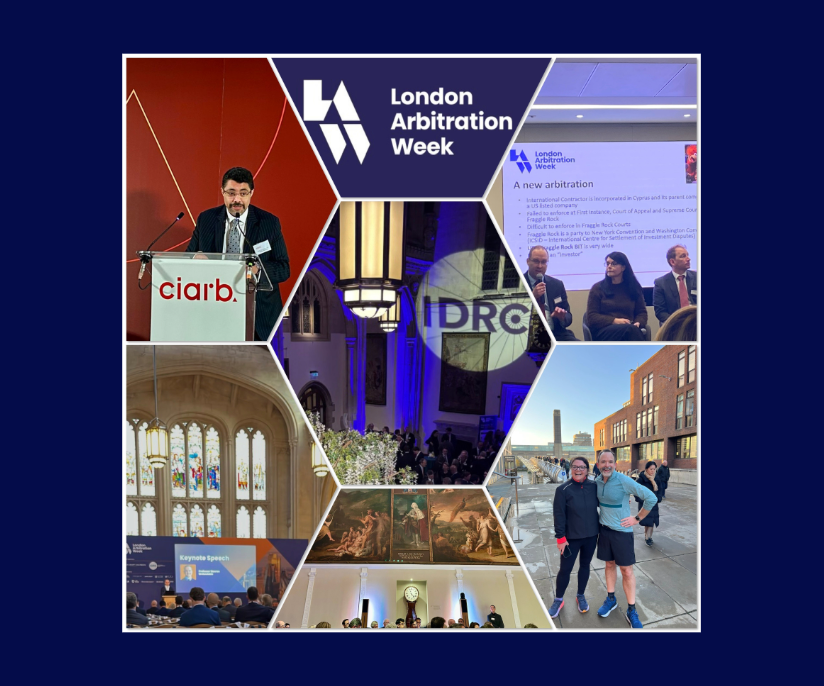
Dubai, Hong Kong, New York, Paris, São Paulo, Tel Aviv, Singapore, Sydney …. no, not my bucket list of holiday destinations for 2026, but just some of the International Arbitration Weeks taking place across the globe almost every month of the year. What began as a handful of flagship gatherings has become a truly international circuit, with each city vying to showcase its expertise, attract top practitioners and position itself as the hub for cross-border dispute resolution. And, of course, last week saw London finally join this illustrious line-up, successfully adding our voice and considerable weight to the global arbitration calendar.
I went to three of these Arbitration Weeks in 2025: Paris, Dubai and London - or PAW, DAW and LAW as they’ve become affectionately known in international arbitration circles. I’m no seasoned pro by any means, but no matter how far-flung the location, it seems that they all have a tendency to follow a fairly well-trodden path: opening drinks receptions, panel discussions, Oxford debates, full-day conferences, breakfast briefings, and invite-only networking events across five jam-packed days (and nights). Layer on an early morning 5k and the ubiquitous Law Rocks, and you’ve signed yourself up for a full-on BD marathon. And, as I’m becoming acutely aware, if you’re doing a marathon: you've got to prepare, you’ve got to pace yourself, you’ve got build in some recovery time, and, when it all gets a bit painful towards the end, you’ve just got to push through!
All jokes aside, Arbitration Weeks have a particularly powerful pull. With the scale of projects in dispute, the high-value work on offer, and long pipeline potential, it’s no surprise that so many in the industry want a bigger slice of the international arbitration pie. So, perhaps we all feel the need to be hovering near the oven door when the opportunities come out piping hot. The FOMO is real. Yet so too is the pressure, and that pressure can look different for everyone: deciding whether to attend, which weeks to prioritise, the ROI of going, whether to sponsor the week or just go along to the free events etc. Even once all that’s decided, navigating the sheer volume of competing activity, while somehow keeping on top of the day job at the same time, is something of a BD balancing act for everyone.
As a BD Manager, here are a few things I’ve learned, how I try and approach it, and some of my thoughts on making the most out of the weeks:
1. Plan Early. Plan Practically
When I first sat down to write this blog, I promised myself I would try and avoid drifting into the usual “BD basics”. And yet immediately, I found myself thinking about the importance of planning. Not necessarily the glossy, theoretical kind either, that’s a given, but the unglamorous, practical planning that can actually make a big difference. Firstly, try and commit early. You often need to sign up well in advance as events can soon become fully booked. You get accepted to some events immediately, some involve pre-vetting, others confirm attendance a week before (only sometimes for you to be relegated to a waiting list), and for some the answer is simply “no”. So you need to make sure you’ve allowed enough time to look at alternatives. Events are generally added to the calendar on an ongoing basis, so make sure you check them daily during the preceding weeks before. The timing of events can offer differ too and it’s not always clear whether a 9am start means that’s why registration begins, or the session itself gets underway. If it’s ambiguous, check with the organisers as arriving too late can mean missing valuable parts of the event.
Then there are the logistics - how far apart are the venues? How are you getting between them? How long does it really take at peak times? Paris traffic is a nightmare. Dubai traffic is a nightmare. London traffic… well, you get it. There’s little point building an impressive-looking schedule if you spend most of the day in Ubers watching it unravel, so I think it’s a good idea to map out what you want to attend, but be realistic and honest about what you’re really able to get to and how meaningful it is when you’re there.
Anyone based locally is likely to have a diary that fills up quickly during arbitration weeks, so if a conversation really matters, I’d aim to reach out early, before everyone else does. Though, be mindful of how you do it and avoid coming across that you’re only contacting them because “you’re in town”; relationships land better when there’s continuity, not just a last-minute message to suit your travel plans.
Sticking with the theme of people, there’s also a small irony about international arbitration weeks: you often end up running into more London-based contacts abroad than you do back in London. It does raise the question, so why travel all the way to e.g. Dubai or Paris, when plenty of delegates work round the corner? Well in my experience, being in a different country can change the dynamic. You’re removed from the usual day-to-day pressures and distractions, but you’re still very much in work mode and that combination can sharpen conversations and deepen relationships. I’ve found that people are more present, more intentional with their time, and more open to meaningful exchanges than they might be in the middle of a normal working week back home.
With that in mind, I think it pays to be deliberate. Check LinkedIn to see who’s attending and think strategically about who you’d like to connect with, support, or finally meet in person. Reach out in advance and line up coffees, informal catch-ups or drop them a simple “see you there”. A few well-chosen advance conversations can make the entire week far more valuable and enjoyable than simply turning up and drifting from panel to panel.
2. Don’t Attend Everything. Attend What Matters
Arbitration Weeks have become something of an institution with more cities hosting them, more organisations sponsoring them, and more practitioners circulating through them each year. There’s so much to go at, which can be as exhilarating as it is overwhelming. These weeks can tempt everyone into overscheduling, but making the most of them doesn’t necessarily mean attending the most events; it simply means attending the right ones.
Supporting your colleagues should, of course, sit high on the list. If your colleagues are speaking at events, make the effort to show up, not just as a familiar face in the room, but as visible support. It matters more than people realise, both internally and in how the firm presents itself externally. The same applies to clients and key industry relationships. They notice when you attend their sessions, share thoughtful insights on LinkedIn, or reference points from the event in a follow-up conversation. Those small signals demonstrate interest, preparation and respect for their expertise and, in a competitive market, that kind of attentiveness can differentiate you. Of course, this means they might notice when you don’t attend too: urgent work matters will always crop up, but when the name badge is repeatedly left on the table or the follow-up never comes, I don’t think it’s ever a great look. So, if you want to work with a particular person or firm, try and be visible where they’re investing their time and energy.
My advice would also be to have a good mix of formal panels with informal catch-ups, and large flagship events with smaller, more conversational gatherings. A varied approach keeps the week energising and productive, so dip in and out of different formats and audiences to allow you to meet a wider range of people and maximise visibility in different settings. When in doubt, ask yourself: does the event advance key relationships, reinforce a strategic priority, or offer meaningful market intel? If the answer is no, I think it’s probably one to cross off the list….
3. Attend (without always attending)
Arbitration Weeks are also usually built on parallel tracks with multiple events taking place simultaneously across the host city. Even so, at several DAW events I found myself in a couple of overly subscribed, standing room only sessions, with people being turned away at the door. Organisers understandably plan for a healthy no-show rate and tend to overbook as a result, so admittedly access can sometimes come down to timing rather than intent. Fortunately, in places like the DIFC in Dubai, many events run concurrently within the same cluster of hotels. That concentration makes both logistics and networking far easier. And while organisers may not thank me for saying this, if a session is oversubscribed, or you’re simply short on time, it’s still possible to spend time in the networking areas before and after and be present for many of the most valuable conversations that happen around the edges, even if you don’t sit in for the session itself. If you don’t actually have a place, though, perhaps don’t push your luck with the refreshments ….
I think it’s fair to say that for fee earners, it’s rarely realistic to dedicate five full days to events. That doesn’t mean arbitration weeks aren’t worth engaging with, far from it, as you don’t have to commit to the entire week; dipping in and out can be just as effective. A couple of carefully chosen days, anchored around the right sessions, will almost always outperform a packed but fragmented schedule. I think this is where strong BD support makes a real difference - by helping fee earners to identify events aligned with priority contacts or core practice areas, along with assistance with planning and smoothing over logistics allows them to maximise their fee earning without sacrificing momentum and show up with purpose when they can.
4. Don’t work the room
Perhaps a slightly controversial view for a BD manager, but I don’t think the goal is always to meet everyone. The goal is to meet the right people and actually connect. I find it far more effective to have a short, loose list of people I’d like to speak to if the opportunity arises, without always forcing introductions or manufacturing conversations. We all know the phrase “quality over quantity”, and I think it applies to networking as much as anything else. In my experience, the best opportunities come from genuine curiosity, shared experiences, mutual connections, and staying in conversations long enough to build rapport. If you’ve had five thoughtful conversations in an evening, you’ve done some good BD in my book. No one remembers the person who handed out 40 business cards, but everyone remembers the person they actually enjoyed talking to.
If BD feels intimidating, arbitration week is a relatively safe training ground. Everyone is there to meet people and conversation is expected, so networks can be built in every direction. I also think it’s worth remembering that not every handshake is a BD opportunity, not every conversation needs to lead somewhere and not every contact is immediately part of your firm’s strategy. Those connections may never turn into a formal instruction, but they still matter.
5. Keep your friends close…
When you attend any industry event, the dream is always the same: a room full of clients or prospective clients. In reality, many are surrounded by plenty of “competitors”. There are few things quite as palpable as the energy drop when two people shake hands, introduce themselves only to realise they do exactly the same job. But when it comes to BD, does that really matter? Admittedly, it’s not a great business model to only network with competitors long-term. However, whether we like it or not, our industry even on a global scale is arguably pretty small. As such, competitors are part of all of our respective professional networks: the expert with whom you co-author a joint report, a fellow tribunal member, a speaker alongside you on a panel at a conference or, you never know, a person who may refer work your way if they or their firm are conflicted. All these relationships can be incredibly valuable and I think the lines between competition and collaboration are far more fluid than we perhaps appreciate at times. Building genuine relationships, even with competitors, isn’t optional, but perhaps strategic. Today someone might be stood across the room as your competitor, but tomorrow they could just as easily be a colleague, a boss, or, better still, a friend.
6. Divide and conquer
I don’t think any of us could or should piece together the whole Arbitration Week puzzle alone. The value comes from dividing and conquering, by splitting coverage across key sessions and events and then coming back together to share insights. I think that collective approach generally makes better use of time and allows individual observations to build into a fuller, more useful understanding of what’s really happening in the market.
It also helps when teams make a point of converging around certain key events. Turning up together creates a stronger firm presence, makes it easier to join conversations, and helps facilitate introductions in a relaxed, natural way. Those shared moments give everyone common reference points and stop the week feeling disjointed. While conversations should feel natural, walking into a busy reception with nothing to say rarely works. Having a few topics or a genuine question in mind helps get past the small talk more quickly—and if all else fails, the familiar “we’ve been in the same sessions all week” opener still does the job.
Just as important is being clear about where BD presence genuinely adds value. When BD professionals are in the right rooms, it reinforces an understanding of the market and the practice, and a real investment in its success. Attending selected sessions can deepen market intelligence and highlight emerging opportunities, not just fill a diary with social events. That said, not everything needs a BD lens. Some highly technical discussions are best left to the lawyers and experts, allowing BD to focus its time and energy where it has the greatest impact.
7. Don’t underestimate internal BD
Perhaps one of the unsung heroes of Arbitration Weeks is their impact on internal BD. Something that’s easily forgotten is that BD isn’t only external. Strong internal relationships matter too, and these weeks provide a natural opportunity to build them. Because they’re usually held abroad, you feel those internal relationships more acutely. You’re at times navigating unfamiliar venues, languages, and schedules together, comparing notes between sessions, grabbing breakfast before the day starts, and decompressing over a drink at the end of it. That shared experience creates a level of camaraderie you simply don’t get from sitting behind a desk.
I think clients and industry peers notice it too. The most effective teams are rarely just technically strong; they’re cohesive. When clients can see that colleagues know each other well and genuinely enjoy working together, the confidence is contagious. In a crowded market, internal alignment turns individual efforts into a joined-up coordinated practice, and that’s BD gold right there.
8. Build Your BD Muscle
Conversations during Arbitration Week are usually just the starting point, not the outcome. When the week draws to a close, the phone doesn’t suddenly ring unfortunately and work doesn’t materialise simply because you were there. The real value is often created when the name badges come off, but before memories fade and focus returns to the routine day-to-day. So,
Take notes: you will not remember everyone you met, so after each event, jot down who you spoke to, what you discussed, any potential follow-ups, and introductions that should be made. Those small details may turn a polite conversation into a meaningful connection later on.
Within 24–48 hours: send the LinkedIn request, drop a short note, share something relevant, or thank someone for a panel insight that stuck with you. If you don’t follow through, the BD value can evaporate pretty quickly once the momentum is lost.
Debrief internally: What did you learn? Who was visible, and who wasn’t? Practical points matter too: which area to stay next time, which hotels were people at, which sessions delivered, and what the week actually cost the business? A short debrief captures insight while it’s still fresh and makes future planning smarter.
Share intelligence as it happens: if you hear something useful, an offhand client comment, a panel takeaway, or a trend that clearly resonates, pass it on with context. That flow of information can turn individual attendance into collective value for the team.
Marathons disguised as sprints
Over the course of a few days, Arbitration Weeks compress hundreds of interactions, dozens of introductions, multiple touchpoints and high-density visibility. With the weeks predictably rife with arbitrators, lawyers, experts and BD professionals, they bring the global disputes community together like few others, which means they’re a fantastic playground to understand what’s really happening in the market. For BD managers, in particular, they offer a unique opportunity to build relationships, gather market intelligence, showcase talented colleagues, and support the growth of a disputes practice. The balance matters though, so my advice is to be selective, connect authentically, follow up and show enthusiasm without trying to be superhuman. And if the balance doesn’t feel quite right every time, there’s always the next one and the one after that. So, Matt and Jonathan, if you’re reading this, I hear Sydney is very nice this time of year 😉.
Finally, I’m sure I speak for many in congratulating the committee on a very successful inaugural LAW, and in offering enormous thanks for the time, effort and investment that went into delivering the week and crossing the 2025 finish line on a real high.
BACK TO BLOG
 Print Article
Comments
Comments are subject to our site participation guidelines and moderation policy, which can be viewed here. By joining the conversation, you are accepting our site rules and terms. Please note our policy is for readers to use their real names when commenting.
There are no comments for this blog yet!